Making connections one neuron at a time

We work with your brain, not on it.

Thirty years of biofeedback and cognitive rehabilitation. We assess, remediate, and teach the practitioners coming up to join us.

Regulation is not something done to you. It is something your brain already knows how to do; we simply give it the unique information needed to remember.

A quiet empty room: an armchair with a wool throw beside a wide wooden window, autumn leaves outside, plants and books on the sill, afternoon light across a wooden floor.

What regulation means

Regulation is not staying in one quiet state. It is your brain’s ability to continuously balance and transition between rest, sharp focus and high alert. Dysregulation happens when that rhythm breaks down, leaving you locked in overdrive, or stuck in a fog you cannot shake.

Start with an age

Three doors, set by life stage. Which one is yours depends on the age of the person being assessed and on whether an injury or a decline brought you here. What happens after the assessment is NeuroCognitive Processing, at any age.

  1. Two infants lying on a bed, propped on their forearms, wearing hooded towels.

    Birth to six years

    Developmental Milestones

    A parent-led inventory across seven domains: gross motor, fine motor, perceptual-motor, language, cognitive, social, and self-help. You run it at home, and it comes with remediation activities.

    How Milestones works
  2. A boy and a man laughing together over a board game at a kitchen table.

    Age seven to seniors

    NeuroDevelopmental Profile

    A self-directed survey for ages seven through seniors covering attention, memory, and executive function, read against the Magnificent 7. It generates your Individualized NeuroDevelopmental Profile.

    How the Profile works
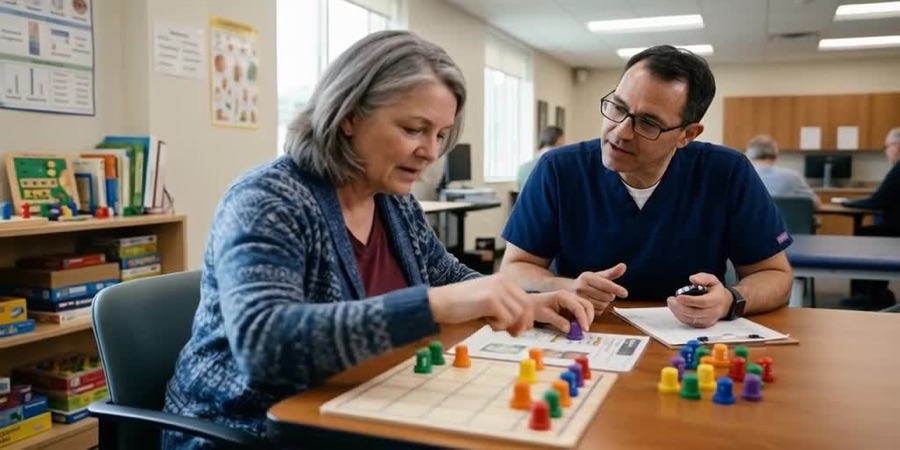
  3. A clinician and a woman working together on a structured pegboard task in a therapy room.

    After injury or decline

    Cognitive Rehabilitation

    Structured therapy following brain injury, stroke, illness or cognitive decline. Restorative work rebuilds damaged pathways. Compensatory work routes around what will not repair.

    How rehabilitation works

Who knows you better than you?

You are the foremost expert on your own daily experience.

Clinical metrics give us the data. Your personal insight gives us the context, and the two together are what make an assessment worth anything. No one understands the subtle shifts in your focus, energy, or mood better than you do.

So we start there. Our assessments are built to translate what you already notice into something specific enough to act on, and only then do we test against it. That order matters. Run the other way round, and you get a label instead of a plan.

The Magnificent 7

A single score tells you almost nothing about a brain. We map seven systems and ask what each one is actually contributing, so remediation targets the struggling system, even when a louder symptom is shouting over it.

And we train both tracks at once. Most programs ask you to sit passively and watch a screen. NeuroCognitive Processing runs neurofeedback while you work through remediation, so the brain builds stability and skill under load.

  1. Prefrontal cortexDecision speed, reasoning, impulse control
  2. Temporal lobesAuditory processing and memory retrieval
  3. Parietal lobesWorking memory, orientation, attention
  4. Occipital lobeVisual tracking and processing speed
  5. Basal gangliaAnxiety thresholds and the body’s idle speed
  6. Cingulate systemCognitive flexibility and rigid thought loops
  7. Deep limbic systemMood, energy and sleep restoration

Four cognitive systems Three physiological systems See what each one governs

What people come to us with

Almost nobody arrives with a diagnosis. They arrive with a description, and the description is the useful part.

  1. My reactions land a beat behind everyone else’s.

    Prefrontal cortexDecision speed

  2. I lose the end of a sentence before it finishes.

    Temporal lobesAuditory sequential memory

  3. Left and right still trip me up, every time.

    Parietal lobesOrientation and working memory

  4. My eyes slide off the line when I read.

    Occipital lobeVisual tracking

  5. I cannot drop out of alert, even when nothing is wrong.

    Basal gangliaAnxiety threshold and idle speed

  6. A thought gets in and will not shift for hours.

    Cingulate systemPerseveration

  7. I sleep all night and none of it restores anything.

    Deep limbic systemSleep restoration and energy

We teach what we do

We spent years helping build foundational systems across the biofeedback field. What we learned belongs to the field, not in a vault.

  1. Certified Apprentice

    Four-day intensive. Build an Individualized Developmental Profile from standardized testing data, and learn which remediation activities address what the numbers actually show. Learn it, do it, teach it.

  2. Certified Professional

    Map individual brain networks and translate cold clinical testing metrics into a plan a family can follow. Covers the standardized batteries, the data sets, and the compensatory strategies behind each score.

  3. Certified Mentor

    The operational tier. Reporting, scaling, client management, and the practice systems that let you stop drowning in admin. Mentors are matched with incoming apprentices and earn while they teach.

Collaboration over isolation

Our affiliate offices share a referral network, a client care standard, and access to our own diagnostic tooling. You keep your practice. You stop running it alone.

Also on the training track

Introduction to NeuroCognitive Processing, Business Boot Camp, NeurOptimal® certification, and Functional Sign Language.

Two people, thirty years, one practice

Lisé built the clinical side. Marc built everything that lets the clinical side run, and has been partnering with her for over three decades.

They spent years inside the biofeedback industry helping grow a company that carried someone else’s name. This one carries theirs.

You will not be handed off to an account manager. There isn’t one.

Meet the people behind the practice

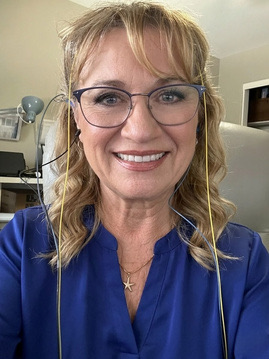
Dr. Lisé Spurlock-DeLong, wearing neurofeedback sensors, smiling at the camera.
Dr. Lisé D. DeLong, Ph.D., CPCRT. Founder and Clinical Director.
Marc DeLong, wearing wire-framed glasses and a pale shirt, smiling, in a room with bookshelves behind him.
Marc DeLong. Manager of Operations.

Questions people ask first

What is neurofeedback?

Neurofeedback reads your brain’s electrical activity in real-time and reflects it back to you. Dynamical Neurofeedback® does not push the brain toward a target it decided on in advance. It signals the moment it detects movement in the central nervous system, and lets your brain correct itself.

The longer answer

No. Most people begin with a self-directed assessment. Parents assessing a child under six start with Developmental Milestones. Everyone from age seven upward starts with the NeuroDevelopmental Profile.

People recovering from traumatic brain injury or stroke, people living with ADHD, dyslexia, anxiety, or memory decline, and children whose development is not tracking as expected. We work with people from birth through seniors.

Yes. Three tiers: Apprentice, Professional, and Mentor. It covers assessment, remediation, and the business of running a practice, and it is open to practitioners already working in the field.

See the certification path

Take something home with you

Between sessions is where most of the work happens. These are the downloads and the journal we hand to clients, sold through our storefront.

Package of 3 Neurofeedback Videos, 33 minute

Forest, ocean and sky, all three at session length, bought together.

$49.95 USD

My “Lived-Experience” Journal

Handwriting reaches memory and emotional processing along pathways typing does not. Shipped inside the US.

$14.95 USD

Live NeurOptimal® Basic Certification Course

Two days live, online or in person in Las Vegas, taught by the person who wrote the course. Enrollment closes seven days before each date.

$660.00 USD

Prices in USD, as published in the storefront. Checkout, delivery and support for anything on this shelf run through store.cognitive-connections.com.

Start with what you already know

The first step is an assessment you fill in yourself. It takes an evening, and it tells us where to look.